

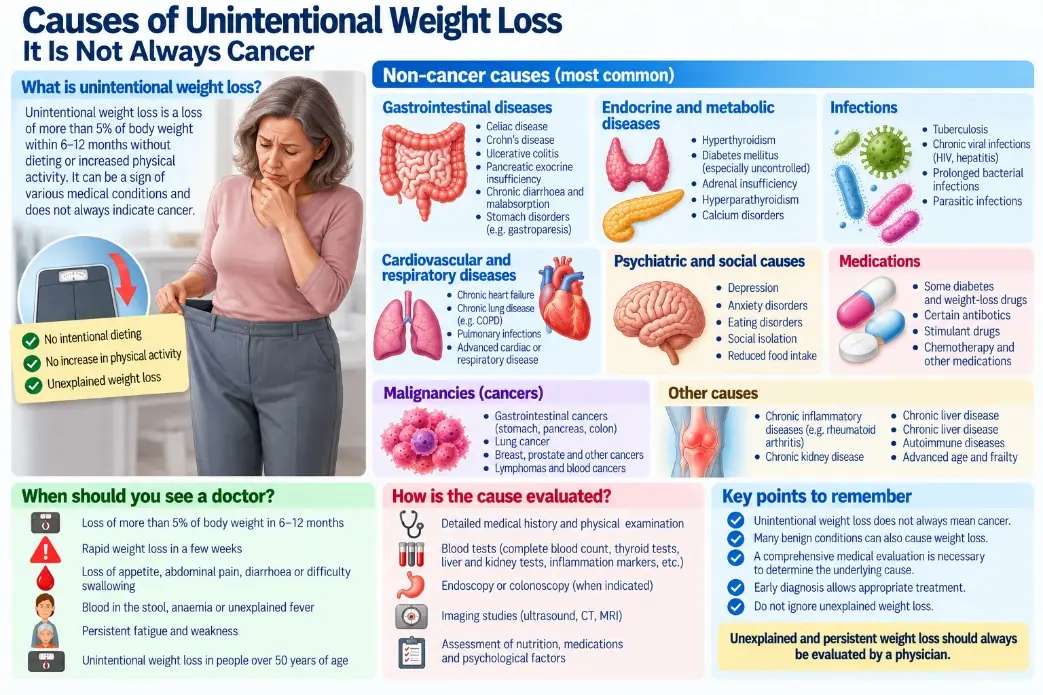
Are you losing weight even though you are not dieting, not exercising more and have not changed your eating habits? Are you getting thinner even though your appetite is normal?
Unintentional weight loss is an important symptom that worries patients. Especially in people who lose a noticeable amount of weight in a short time, one of the first conditions that comes to mind is cancer.
But not every unintentional weight loss means cancer.
Digestive diseases, thyroid disorders, diabetes, chronic infections, medicines and psychological problems can also cause weight loss.
What matters is to investigate the cause of the weight loss properly.
What is unintentional weight loss?
Unintentional weight loss means losing body weight without consciously dieting or increasing physical activity.
Losing more than 5% of body weight within 6–12 months is generally considered clinically important.
For example, losing more than:
- 3 kg for a person weighing 60 kg,
- 3.5 kg for a person weighing 70 kg,
- 4 kg for a person weighing 80 kg,
- 5 kg for a person weighing 100 kg
may need investigation.
This threshold is not a strict rule. Rapid weight loss over a few weeks in particular should be assessed even if it has not reached the 5% mark.
Why do people lose weight without having cancer?
Weight loss basically happens through three mechanisms:
1. Not eating enough: reduced food intake because of loss of appetite, nausea, difficulty swallowing or psychological reasons.
2. Not absorbing food well enough: not getting enough benefit from the food eaten because of bowel or pancreatic disease.
3. The body using more energy: thyroid disease, uncontrolled diabetes, infections or certain chronic diseases.
In some people several of these mechanisms are present together.
Digestive Causes of Unintentional Weight Loss
1. Coeliac disease
Coeliac disease is triggered by eating gluten in people with a genetic predisposition and can damage the small bowel.
When the absorbing surface of the small bowel is affected, absorption of nutrients can be impaired.
As well as weight loss, patients may have:
- Chronic diarrhoea
- Bloating
- Iron deficiency and anaemia
- Tiredness
- Vitamin and mineral deficiencies
But coeliac disease does not always cause diarrhoea. In some patients weight loss and anaemia are the main features.
Important: Starting a gluten-free diet before coeliac disease has been tested for can make the diagnostic tests less reliable.
2. Crohn’s disease
Crohn’s disease is a chronic inflammatory bowel disease that can affect different parts of the digestive system.
Weight loss is one of the important symptoms of Crohn’s disease.
Bowel inflammation, loss of appetite, impaired absorption and the body’s increased energy needs can all contribute to weight loss.
Crohn’s disease may be looked for especially when these symptoms occur together:
- Long-lasting diarrhoea
- Abdominal pain
- Anaemia
- Fever
- An abscess or fistula around the anus
- Bowel symptoms at night
In Crohn’s disease, weight loss is sometimes more noticeable than the bowel symptoms.
3. Ulcerative colitis
Ulcerative colitis is a chronic inflammatory disease affecting the large bowel.
Weight loss can develop especially when the disease is active, because of loss of appetite, frequent bowel movements and inflammation in the body.
Bloody diarrhoea, needing the toilet often and abdominal pain are important symptoms of the disease.
Marked weight loss can be seen particularly in extensive or severe active disease.
4. Pancreatic enzyme insufficiency
The pancreas produces enzymes that help digest fats, proteins and carbohydrates.
When these enzymes are lacking, food cannot be digested properly.
Fat absorption in particular can be impaired.
Exocrine pancreatic insufficiency can cause:
- Weight loss
- Greasy, bulky, foul-smelling stools
- Bloating
- Wind
- Nutritional deficiencies
Chronic pancreatitis and some other pancreatic diseases can cause enzyme insufficiency.
Where needed, a faecal pancreatic elastase test and other investigations are used.
5. Chronic diarrhoea and malabsorption
Long-lasting diarrhoea can cause weight loss in some patients.
But not every chronic diarrhoea means malabsorption.
Small-bowel diseases, some infections, past bowel operations and certain malabsorption disorders can be linked with weight loss.
Chronic diarrhoea together with anaemia, vitamin deficiencies or marked weight loss in particular calls for more detailed investigation.
6. Stomach disorders and early fullness
Some stomach disorders can stop a patient from eating enough.
For example, people with functional dyspepsia or gastroparesis may have early fullness, feeling over-full after meals, nausea and loss of appetite.
If food intake falls because of these symptoms, weight loss can develop.
But it is not right to put marked or progressive weight loss down to a functional stomach disorder alone.
Organic diseases need to be assessed first.
7. Digestive surgery
After stomach or bowel operations, food intake and absorption can change.
Weight loss can be seen especially after weight-loss (bariatric) surgery, small-bowel resections and some other digestive operations.
Follow-up for vitamin, mineral and protein deficiencies is important in these patients.
Causes of Weight Loss Outside the Digestive System
1. Hyperthyroidism
When the thyroid gland makes too much hormone, metabolism can speed up.
These patients can lose weight even though their appetite is normal or increased.
Palpitations, sweating, intolerance of heat, trembling and frequent bowel movements may come with it.
2. Diabetes
Marked weight loss can develop, especially in uncontrolled diabetes.
Passing urine often, excessive thirst, tiredness and increased appetite may come with it.
3. Chronic infections
Tuberculosis and some other chronic infections can cause weight loss.
These patients may have fever, night sweats and tiredness.
4. Depression and other psychological causes
Depression, anxiety disorders and eating disorders can affect food intake and cause weight loss.
Especially in older age, depression and social isolation can be important causes.
But it is not appropriate to put unexplained weight loss down to stress or psychological causes alone.
5. Medicines
Some diabetes and weight-loss medicines, stimulant medicines and some other treatments can reduce appetite or cause weight loss.
Especially when weight loss develops after starting a new medicine, it is important to review the medicines being taken.
6. Other chronic diseases
Advanced heart, kidney and lung diseases can also cause weight loss.
In these conditions, loss of appetite, increased energy needs and muscle loss can occur together.
Can Cancer Cause Weight Loss?
Yes. Unintentional weight loss can be one of the symptoms of some cancers.
Weight loss can be seen especially in cancers of the stomach, pancreas, bowel and lung, and in some cancers of the blood and lymphatic system.
Loss of appetite, metabolic changes and loss of muscle tissue can play a part in cancer-related weight loss.
But weight loss alone does not make a diagnosis of cancer.
When the likelihood of cancer is assessed, the patient’s age, how fast the weight was lost, the examination findings and any accompanying symptoms are taken into account.
When Should Weight Loss Be Taken Seriously?
You should see a doctor in the following situations:
- Losing more than 5% of body weight in the last 6–12 months
- Marked weight loss within a few weeks
- Weight loss that keeps going
- Getting thinner even though your appetite is normal
- Long-lasting diarrhoea
- Blood in the stool
- Difficulty swallowing
- Anaemia
- Night sweats or unexplained fever
- Constant abdominal pain
- Marked tiredness
New, unexplained weight loss in older age in particular should be assessed carefully.
How Is the Cause of Unintentional Weight Loss Investigated?
First, the patient’s previous and current weight are compared.
The doctor asks over what period the weight was lost, about changes in appetite and bowel habit, and which medicines are being taken.
The patient’s nutritional state and examination findings are assessed.
Where considered necessary, the following tests may be done:
- Full blood count
- Blood sugar and HbA1c
- Thyroid function tests
- Liver and kidney function tests
- CRP and other markers of inflammation
- Iron, vitamin B12 and other nutritional markers
- Tests for coeliac disease
- Stool tests
- Abdominal ultrasound
- Gastroscopy or colonoscopy
- CT scanning and other imaging where needed
Not every patient has all of these tests. Investigations are planned according to the patient’s symptoms, age, examination and first test results.
What Should People Who Are Losing Weight Do?
First, it should be established whether the weight loss is real and ongoing.
If possible, weigh yourself regularly on the same scales under similar conditions.
Eating habits and changes in appetite should be reviewed.
But in unexplained weight loss, just trying to eat more or taking nutritional supplements is not enough.
It is important to find the underlying cause.
Frequently Asked Questions
My appetite is good but I am losing weight. Why?
Hyperthyroidism, uncontrolled diabetes and some malabsorption disorders can cause weight loss even when appetite is normal or increased.
Is it normal to lose 5 kilos in a month?
It depends on your starting weight and your circumstances. But losing 5 kilos in a month without changing your diet or exercise is generally something that needs to be assessed.
My blood tests are normal but I am losing weight. Does it matter?
Yes. Normal first blood tests do not mean every disease has been ruled out. If the weight loss continues, a further assessment may be needed.
Does weight loss always need an endoscopy?
No. The decision about gastroscopy or colonoscopy depends on the patient’s age, symptoms, examination findings and other test results.
Can stress cause weight loss?
Yes. In some people stress can reduce appetite and change eating patterns. But marked weight loss should not be put down to stress alone.
Can you lose weight quickly without having cancer?
Yes. Uncontrolled diabetes, hyperthyroidism, some bowel diseases and other serious health problems can cause rapid weight loss.
Conclusion
Unintentional weight loss can result from many different diseases or conditions.
Cancer is only one of these causes.
Coeliac disease, Crohn’s disease, pancreatic enzyme insufficiency, diabetes, hyperthyroidism, chronic infections and nutritional problems can also cause weight loss.
The most important thing is not to ignore unexplained weight loss and to investigate its cause in good time.
Early assessment can help find the underlying disease and start the right treatment.
This article is for general patient information. It does not replace an assessment by a doctor for diagnosis and treatment.
Sources
- Prof. Ali Tüzün İnce, MD