

Conditions
Digestive system disorders grouped by organ system. Each page covers symptoms, how the condition is diagnosed, and the treatment options.
Oesophagus
Difficulty swallowing, reflux and other disorders of the oesophagus.
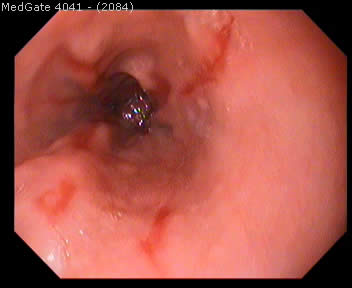 Reflux DiseaseThe stomach contents escaping back into the gullet happens in healthy people too. It is called reflux disease when that escape causes troublesome symptoms or damages the gullet.Gastro-oesophageal reflux disease · GORD · GERD · Acid reflux disease · Heartburn · Burning behind the breastbone · Acid taste in the mouth · Acid coming up into the throat · Burning in the throat
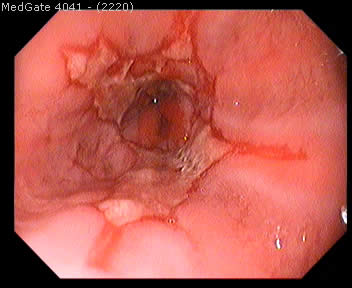 Barrett's OesophagusBarrett's oesophagus is a change in the cells of the lower gullet brought about by long-standing reflux. It is not cancer, but certain patients need regular follow-up.Barrett esophagus · Intestinal metaplasia of the oesophagus · Long-standing reflux · A change in the lining of the gullet
- AchalasiaA rare condition that makes it difficult for the gullet to carry food and drink into the stomach. The contractions of the gullet are disturbed and the valve at the entrance to the stomach cannot relax enough.Cardiospasm · Achalasia of the oesophagus · Difficulty swallowing · Food sticking · Food coming back up · Eating very slowly · Feeling of food stuck in the chest · Food coming into the mouth at night
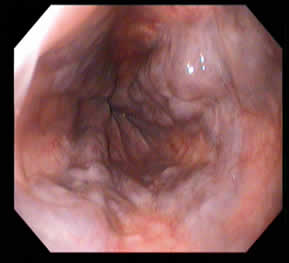 Oesophageal VaricesOesophageal varices are veins in the gullet that have widened, most often because liver disease has raised the pressure in the portal vein. They cause no symptoms until they bleed, and a bleed is an emergency.Oesophageal varices · Varices of the gullet · Vomiting blood · Black, tarry stools · Bleeding in liver disease
Stomach
Gastritis, ulcers and other stomach complaints.
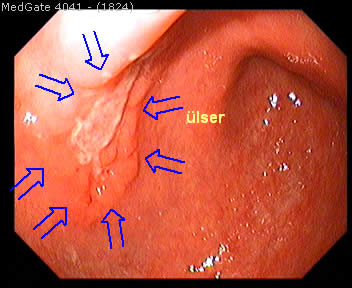 Peptic Ulcer DiseaseA peptic ulcer is a sore in the lining of the stomach or the duodenum that reaches deeper than a surface irritation. Its two most important causes are H. pylori infection and certain painkillers.Peptic ulcer · Stomach ulcer · Gastric ulcer · Ulcers of the stomach and duodenum · Burning stomach pain · Gnawing pain in the upper abdomen · Stomach pain that wakes you at night
- Cyclic Vomiting SyndromeCyclic vomiting syndrome runs in attacks of severe nausea and repeated vomiting at intervals. Its most characteristic feature is that between attacks the person is largely well.Cyclical vomiting syndrome · CVS · Repeated bouts of vomiting · Vomiting in attacks · Days of nausea
- Delayed Gastric Emptying (Gastroparesis)Gastroparesis is the slow passage of food from the stomach into the small intestine when there is no physical obstruction at the stomach outlet. Diagnosis requires that obstruction be excluded and the delay shown objectively.Gastroparesis · Delayed stomach emptying · Slow stomach emptying · Feeling full early · Bloating after meals · Vomiting hours after a meal
- Duodenal Ulcer DiseaseA duodenal ulcer is a deep sore in the first part of the small intestine, just beyond the stomach. Its most important cause is H. pylori infection, and once the cause is removed it heals completely in most patients.Duodenal ulcer · Ulcer of the duodenum · Hunger pain · Gnawing pain in the upper abdomen · Waking at night with pain
- Dyspepsia (Indigestion)Dyspepsia is not the name of a disease on its own; it is the term for a group of complaints arising from the stomach and the upper abdomen. In everyday speech it is mostly called indigestion.Indigestion · Upper abdominal complaints · Fullness after meals · Feeling full after a few mouthfuls · Pain in the upper abdomen · Burning in the upper abdomen · Nausea and belching
- Eating with a Duodenal UlcerThere is no special diet that heals an ulcer. The aim is to eat a balanced diet while avoiding the foods that make your own symptoms worse. What decides the outcome is finding and treating the cause of the ulcer.Ulcer diet · Peptic ulcer diet · Duodenal ulcer diet · What to eat with an ulcer · Stomach-friendly eating
- Functional DyspepsiaIndigestion that carries on even though the stomach tests are normal: a disorder of gut–brain interaction with fullness after meals, early satiety, and pain or burning in the upper abdomen.Non-ulcer dyspepsia · Functional indigestion · Fullness that goes on long after a meal · Feeling full after a few mouthfuls · Pain in the upper abdomen · Burning in the upper abdomen · Nausea and belching
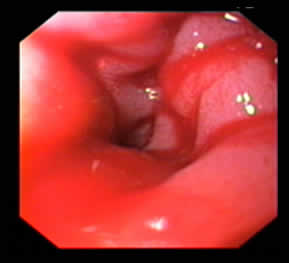 Haematemesis (Vomiting Blood)Haematemesis is a sign of bleeding arising from the gullet, the stomach or the duodenum. It is not a disease in itself but a sign whose cause must always be investigated, and it is an emergency.Hematemesis · Vomiting blood · Upper gastrointestinal bleeding · Blood in the vomit · Coffee-ground vomit · Black stools
- Helicobacter pylori InfectionH. pylori is a common bacterium that settles in the stomach and can live there for years. It causes no symptoms in most people, but because it is linked with gastritis, ulcers and the risk of stomach cancer, treatment is advised when it is found.H. pylori · Helicobacter · Stomach bacterium · Stomach infection · Stomach pain and nausea · Loss of appetite
Small intestine
Malabsorption and diseases affecting the small bowel.
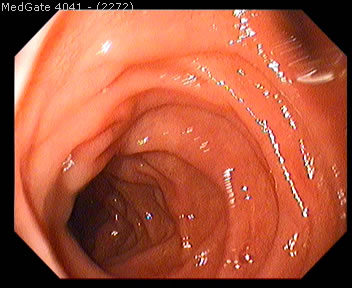 Coeliac DiseaseCoeliac disease is a chronic illness in which, in genetically susceptible people, the immune response to gluten damages the villi of the small bowel.Celiac disease · Coeliac sprue · Gluten enteropathy · Non-tropical sprue · Gluten intolerance · Bloating and diarrhoea after bread · Iron deficiency · Unexplained tiredness
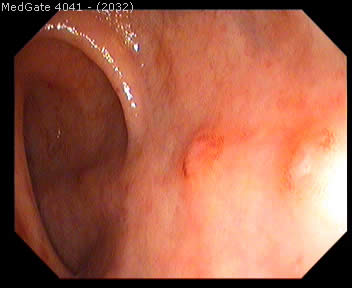 Crohn's DiseaseCrohn's disease is a chronic inflammatory bowel disease that causes long-standing inflammation in the digestive tract and runs in periods of flare and remission.Crohn disease · Regional enteritis · Granulomatous colitis · Inflammation of the bowel · Abdominal pain and diarrhoea · Weight loss · Blood and mucus in the stool
- Lactose Malabsorption and Lactose IntoleranceLactose malabsorption and lactose intolerance are not the same thing; not everyone with malabsorption has complaints after milk, and most people do not need to give up dairy entirely.Lactose intolerance · Milk sugar intolerance · Lactase deficiency · Bloating after milk · Wind · Rumbling in the abdomen · Diarrhoea after dairy
- MalabsorptionMalabsorption is the failure of food to be sufficiently digested in the digestive system or sufficiently absorbed from the bowel; it is not one disease but the consequence of many.Impaired absorption · Steatorrhoea · Fatty stools · Fatty stools · Unable to gain weight · Long-standing diarrhoea · Recurrent vitamin deficiency
- SIBO — Small Intestinal Bacterial OvergrowthSIBO is the presence of more bacteria than normal, or of unsuitable kinds, in the small bowel; it causes bloating and wind, but not every case of bloating is SIBO.Small intestinal bacterial overgrowth · Bacterial overgrowth · IMO · Bloating of the abdomen · Excessive wind · Rumbling in the abdomen · Swelling after meals
Colon
Polyps, inflammatory bowel disease and colorectal cancer.
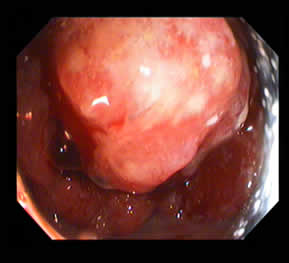 Large Bowel CancerLarge bowel cancer usually develops from the cells lining the colon or the rectum; screening and the removal of polyps can help to prevent it or to catch it early.Colorectal cancer · Colon cancer · Rectal cancer · Bowel cancer · Blood in the stool · A change in bowel habit · Unexplained weight loss
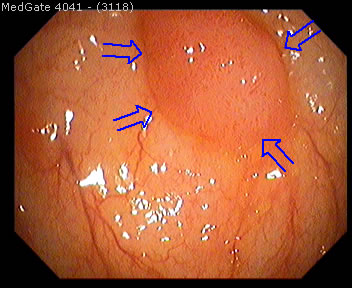 Colon PolypsColon polyps are growths arising from the inner surface of the large bowel; not every polyp is cancer, but some kinds can turn into cancer over years.Colorectal polyps · Adenoma · Bowel polyps · Serrated lesion · Dysplasia · Polyp in the colon · Blood when opening the bowels · A polyp found at colonoscopy
- Crohn's DiseaseCrohn's disease is a chronic inflammatory bowel disease that causes long-standing inflammation in the digestive tract and runs in periods of flare and remission.Crohn disease · Regional enteritis · Granulomatous colitis · Inflammation of the bowel · Abdominal pain and diarrhoea · Weight loss · Blood and mucus in the stool
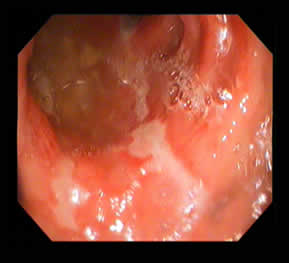 Ulcerative ColitisUlcerative colitis is a long-standing (chronic) inflammatory bowel disease affecting the inner surface of the large bowel and the rectum.UC · Colitis ulcerosa · Bloody diarrhoea · Blood and mucus in the stool · Inflammation of the bowel · Abdominal pain and cramps · Urgency to open the bowels · Tenesmus
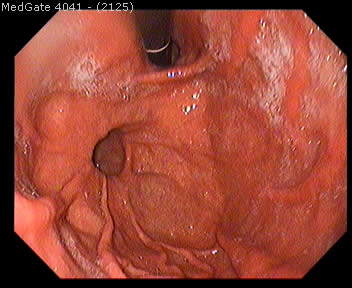 Diverticulosis, Diverticulitis and Diverticular BleedingDiverticula are small pouches in the wall of the large bowel; when they become inflamed this is diverticulitis, and when a vessel is eroded diverticular bleeding may follow.Diverticular disease · Diverticulosis · Diverticulitis · Colonic diverticula · Left lower abdominal pain · Fever · Bleeding from the back passage · Pouches in the bowel
- ConstipationConstipation is not only opening the bowels infrequently; it is also defined by hard stools, straining, a feeling of incomplete emptying and a sense of blockage.Costiveness · Unable to open bowels · Hard stools · Straining · A feeling of not emptying completely
- Diarrhoea After Taking AntibioticsAntibiotics can change the balance of the bowel microbiota and cause anything from mild antibiotic-associated diarrhoea to C. difficile infection.Antibiotic-associated diarrhoea · Clostridioides difficile infection · C. difficile infection · Diarrhoea after antibiotics · Watery diarrhoea while taking medicine · Abdominal pain and fever
- Gas and BloatingGas and bloating are common complaints. What decides how troublesome they are is often less the amount of gas than bowel motility, sensitivity, diet and bowel habit.Meteorism · Flatulence · Bloating · Wind · Gas pain · Rumbling in the abdomen · Passing wind often
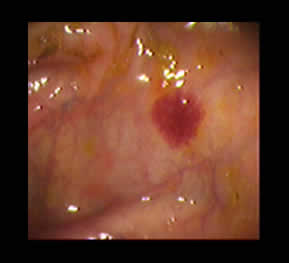 Gastrointestinal AngiodysplasiaAngiodysplasias are vascular lesions formed by the dilatation and fragility of small blood vessels in the wall of the digestive tract. They may cause no symptoms at all, or lead to occult or visible bleeding.Angiodysplasia · Angioectasia · Vascular ectasia · Red or maroon blood in the stool · Black tarry stools · Unexplained iron deficiency · Tiredness and fatigue · Breathlessness or palpitations
- Irritable Bowel Syndrome (IBS)IBS is a chronic disorder of gut–brain interaction in which recurrent abdominal pain occurs together with changes in how often the bowels are opened and/or in the form of the stool.Spastic colon · Spastic colitis · Sensitive bowel · IBS · Recurrent abdominal pain · Bloating · Alternating constipation and diarrhoea · A sudden need to open the bowels · A sense of not emptying completely · Mucus in the stool
Anorectal
Conditions affecting the anus and rectum.
- Anal FissureAn anal fissure is a small tear or split in the lining of the anus. Sharp pain that begins with passing a stool, and bright red bleeding, are the typical complaints.Fissure-in-ano · Anal tear · Sharp pain when passing a stool · Bright red blood on the paper · Fear of opening the bowels · Burning around the anus · Pain that goes on after passing a stool
- Anal FistulaA perianal fistula is a small channel that forms between the anal canal and the skin around the anus, where none should be. Most follow an earlier perianal abscess and infection.Perianal fistula · Fistula-in-ano · Anal fistula · Discharge from the back passage · Fistulotomy · Seton · Perianal abscess · Discharge from the back passage · Perianal abscess · Itching around the anus · Pain and swelling by the anus
- Faecal Incontinence (Loss of Bowel Control)Faecal incontinence is being unable to control solid or liquid stool, so that stool passes from the back passage involuntarily.Bowel incontinence · Anal incontinence · Loss of bowel control · Loss of bowel control · Soiling · Not reaching the toilet in time · Leaking wind · Staining of underwear · Leakage after opening the bowels
- Rectal Bleeding: What Does Blood from the Back Passage Mean?Rectal bleeding is not a disease but a finding. Its commonest causes are benign — haemorrhoids and anal fissure — but repeated bleeding should not simply be put down to haemorrhoids.Blood from the back passage · Blood in the stool · Blood on the toilet paper · Haematochezia · Causes of rectal bleeding · Rectorrhagia · Bleeding from the rectum · Blood from the back passage · Blood in the stool · Blood on the toilet paper
- Rectal ProlapseRectal prolapse is the downward displacement of the rectum — the last part of the large bowel — from its normal position, coming out through the anus in some patients.Procidentia · Prolapse of the rectum · Tissue coming out of the back passage · A sense of not emptying completely · Difficulty opening the bowels · Excessive straining · Mucus from the back passage · Wetness around the anus
Liver and biliary tract
Hepatitis, fatty liver, cirrhosis and gallbladder disease.
- Acute and Chronic Hepatitis BHepatitis B can be prevented, followed up and, where needed, treated effectively; a positive HBsAg does not on its own show how serious the disease is.Hepatitis B · HBV infection · HBsAg · Hepatitis B vaccine · Jaundice · Liver inflammation · HBsAg positive · Tiredness and loss of appetite
- Ascites (Fluid in the Abdomen)Ascites is not a disease but a sign of an underlying one; the commonest cause is cirrhosis of the liver, but not every ascites has the same cause.Peritoneal fluid collection · Paracentesis · Spontaneous bacterial peritonitis · TIPS · Fluid in the abdomen · Abdominal swelling · Fluid on the belly · Swollen legs
- Bile Duct Cancer (Cholangiocarcinoma)Cholangiocarcinoma is an uncommon cancer arising from the bile ducts; its symptoms and its treatment vary considerably with where in the ducts it lies.Cholangiocarcinoma · Klatskin tumour · Intrahepatic cholangiocarcinoma · Perihilar cholangiocarcinoma · Painless jaundice · Itching · Dark urine · Unexplained weight loss
- Biliary StricturesA biliary stricture is not a diagnosis but a finding that may have either a benign or a malignant disease beneath it; seeing a stricture does not on its own mean cancer.Bile duct stricture · Benign biliary stricture · Malignant biliary stricture · Biliary stent · Jaundice · Itching · Darkening of the urine · Pale stools
- Fatty Liver: What Is It, and Is It Dangerous?Fatty liver is the build-up of more fat than normal in the liver cells. Most people never develop serious liver disease; what matters is not only "is my liver fatty?" but "is there fibrosis in my liver?"Fatty liver · Hepatic steatosis · MASLD · Grade 1–2–3 fatty liver · MASH · How does fatty liver go away? · Liver steatosis · Fat in the liver · Fatty liver found on ultrasound
- Gallstones: What Do They Mean?Having stones in the gallbladder does not by itself mean an operation is needed. What matters is whether the stones are causing symptoms or complications.Gallstones · Stones in the gall bladder · Cholelithiasis · Biliary sludge · Are gallstones dangerous? · Do gallstones need surgery? · Pain after fatty food · Pain in the right upper abdomen · Pain spreading to the back and right shoulder · Yellowing of the eyes and skin
- Hepatitis C (HCV)Hepatitis C can progress for years without symptoms; but today, with antiviral tablets, the virus can be cleared completely in more than 95% of patients.HCV infection · HCV · Direct-acting antivirals · DAA · Jaundice · Liver inflammation · Tiredness and fatigue · Raised liver enzymes
- Primary Sclerosing Cholangitis (PSC)PSC is a chronic disease that can cause inflammation, strictures and scarring in the bile ducts; it has a strong association with inflammatory bowel disease, and with ulcerative colitis in particular.PSC · Sclerosing cholangitis · Small-duct PSC · Raised liver enzymes · Itching · Weakness · Jaundice
- Solitary Liver Lesions Found on ImagingSeeing a lesion in the liver is not a diagnosis of cancer; a substantial proportion of those found by chance are benign, but what the lesion is has to be established properly.Focal liver lesion · Haemangioma · Focal nodular hyperplasia · Hepatocellular adenoma · Liver cyst · A mass in the liver on ultrasound · A nodule in the liver · A cyst found in the liver
- Wilson's DiseaseWilson's disease is an inherited disease in which copper that cannot be excreted builds up in the liver, the brain and the eyes; caught early, it can be treated effectively.Wilson disease · Hepatolenticular degeneration · Copper storage disease · Kayser-Fleischer ring · Copper storage disease · Copper in the liver · Tremor in the hands · Unexplained raised liver enzymes in a young person
Pancreas
Pancreatitis, pancreatic cysts, pancreatic cancer and enzyme insufficiency.
- Acute PancreatitisAcute pancreatitis is a sudden inflammatory disease of the pancreas; it can range from a mild illness to a serious one needing intensive care.Inflammation of the pancreas · Gallstone pancreatitis · Pancreatic necrosis · Pseudocyst · Sudden severe abdominal pain · Pain going through to the back · Nausea and vomiting · Swelling of the abdomen
- Chronic PancreatitisChronic pancreatitis is a disease in which the structure and the function of the pancreas are permanently damaged over time; it causes not only pain but impaired digestion and diabetes.Chronic inflammation of the pancreas · Exocrine pancreatic insufficiency · Type 3c diabetes · Abdominal pain going through to the back · Fatty stools · Weight loss · Newly diagnosed diabetes
- Pancreatic CancerPancreatic cancer may cause no symptoms early on; but it should no longer be seen as a disease about which nothing can be done, and surgery is possible at a suitable stage.Pancreatic ductal adenocarcinoma · Tumour of the pancreas · Whipple operation · Painless jaundice · Unexplained weight loss · Abdominal pain going through to the back · Newly diagnosed diabetes in later life
- Pancreatic CystsPancreatic cysts are mostly found by chance on a scan done for another reason; most are low risk, but some kinds can turn into cancer over time.IPMN · Mucinous cystic neoplasm · Serous cystadenoma · Pancreatic pseudocyst · A cyst found in the pancreas on a scan · Upper abdominal pain · Recurrent pancreatitis
- Pancreatic Neuroendocrine Tumours (pNET)A diagnosis of pNET is not a diagnosis of classical pancreatic cancer; these tumours arise from different cells, behave very differently from one another, and not every small one needs an immediate operation.Neuroendocrine tumour · Insulinoma · Gastrinoma · Zollinger–Ellison syndrome · MEN1 · Sweating and shaking when hungry · Ulcers that will not heal · Watery diarrhoea · A mass found in the pancreas on a scan
- Solitary Pancreatic Lesions Found on ImagingNot every lesion seen in the pancreas is cancer; the aim is to identify the risky ones in good time while avoiding unnecessary operations.Focal pancreatic lesion · IPMN · Pancreatic cyst · Solid mass in the pancreas · A cyst in the pancreas on a scan · A mass found in the pancreas · A nodule in the pancreas
General
Topics that concern the digestive system as a whole.
- Addictive Substances and the Digestive SystemAddictive substances affect not only the brain but the digestive system: opioids cause serious constipation, cocaine can cause bowel ischaemia, and long-term cannabis use can cause recurrent vomiting.Opioid-induced constipation · Narcotic bowel syndrome · Cannabinoid hyperemesis syndrome · Bowel ischaemia · Constipation from painkillers · Recurrent severe vomiting · Sudden severe abdominal pain
- Alcohol and the Digestive SystemAlcohol does not affect the liver alone; it affects the oesophagus, stomach, pancreas and bowels too, and no level of drinking has been shown to carry no cancer risk.Harms of alcohol to the digestive system · Alcohol-related liver disease · Alcohol-related hepatitis · Alcohol and the stomach · Alcohol and the liver · Giving up alcohol
- Do Phones, the Internet and Social Media Affect the Digestive System?A phone does no direct harm to the stomach; the real problem is what goes with screen time — inactivity, irregular eating, late nights and stress.Screen time and digestion · Social media and eating · The gut-brain axis · Reflux at night · Inactivity and constipation · Searching symptoms online
- Smoking and the Digestive SystemSmoking can affect not only the lungs but almost every part of the digestive system, from the oesophagus to the large bowel; there is no safe level of use.Harms of smoking to the digestive system · Nicotine and digestion · Electronic cigarettes · Smoking and the stomach · Giving up smoking · Smoking and reflux