

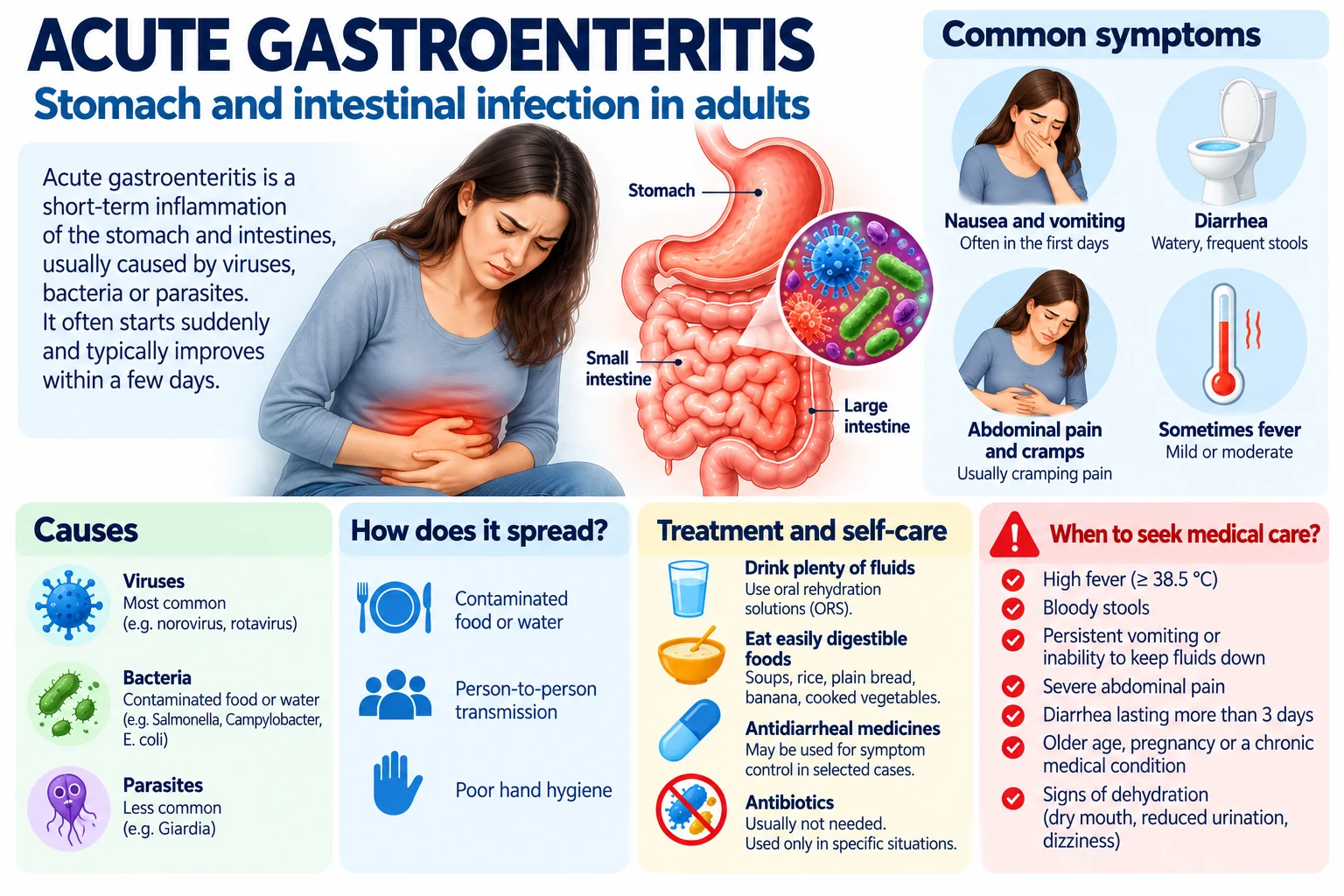
This information is for adult patients. It is not intended for children or infants.
It rests on pathophysiological principles, aiming to support the healing of the intestinal lining (mucosa), to slow gastrointestinal motor function (peristalsis) and to prevent the loss of electrolytes.
The original, evidence-based scientific nutritional principles on which the World Health Organization (WHO) and clinical gastroenterology guidelines are based are as follows:
1. Osmotic and Motility Balance: Choosing Fibre
During diarrhoea, fibre intake is not stopped completely, but the type of fibre is critically important.
- Soluble fibres (should be eaten): Soluble fibres such as pectin and beta-glucan absorb excess water in the intestinal tract and turn into a gel. This helps the stool firm up (bind) and reduces how often the bowels open.
- Sources: Peeled apple (rich in pectin), ripe banana, boiled potato, rolled oats and boiled carrot.
- Insoluble fibres (should be avoided): Cellulose and lignin increase intestinal volume and mechanically stimulate peristalsis (bowel movements). By stimulating the irritated bowel wall even more, they prolong the diarrhoea.
- To be avoided: Bran products, whole grains, raw vegetables, fruit with skins, and dried pulses.
2. The Principle of Low Osmolality: Restricting Sugar and Sweeteners
A high concentration of sugar in the intestinal lumen triggers the mechanism of osmotic diarrhoea.
- Simple sugars (fructose, sucrose): Because the intestinal lining cells (enterocytes) are damaged, they cannot absorb large amounts of sugar. Unabsorbed sugar draws water into the bowel (osmosis) and makes the diarrhoea and watery stools worse. Ready-made fruit juices and sugary foods should therefore not be consumed.
- Sugar alcohols (sorbitol, mannitol): These artificial sweeteners, found in chewing gum and diet products, are not absorbed from the bowel and directly create an osmotic load, increasing the diarrhoea.
3. Temporary Enzyme Deficiency: Secondary Lactose Intolerance
During acute infections or inflammation, the lactase enzyme located on the brush border of the small intestine can be temporarily damaged.
During this time the lactose in milk cannot be digested; it ferments in the bowel and causes severe wind, cramps and watery diarrhoea.
- For this reason, milk intake should be limited in the acute phase, and probiotic sources such as yoghurt and kefir, in which lactose has been greatly reduced by fermentation and which support the gut microbiota, should be preferred instead.
4. Impaired Fat Absorption (Risk of Steatorrhoea)
Damage to the intestinal mucosa reduces the effectiveness of the bile acids and enzymes needed to digest and absorb fats. Unabsorbed fats speed up bowel motility and give the stool a fatty, watery (steatorrhoea-like) form.
- The energy content of the diet should be reduced in fat (hypolipidic) and met from easily digestible proteins (boiled skinless chicken breast, lean meat, egg).
5. Electrolyte Replacement and Oral Rehydration
The primary clinical goal in treating diarrhoea is to prevent dehydration (water loss) and electrolyte imbalance. The sodium–glucose cotransporter (SGLT-1) mechanism in the bowel continues to work even during diarrhoea. In other words, when sodium and glucose (sugar) are taken together in a certain balance, water absorption from the bowel rises to its maximum.
- Potassium loss: Frequent bowel movements remove a great deal of potassium from the body, which leads to muscle weakness and fatigue. Banana and potato are key for potassium.
- Replacing sodium and fluid: Salted ayran (a yoghurt drink), vegetable and meat broths high in sodium, and fat-free strained soups are the cornerstones of keeping hydrated.
Sources
- Prof. Ali Tüzün İnce, MD