

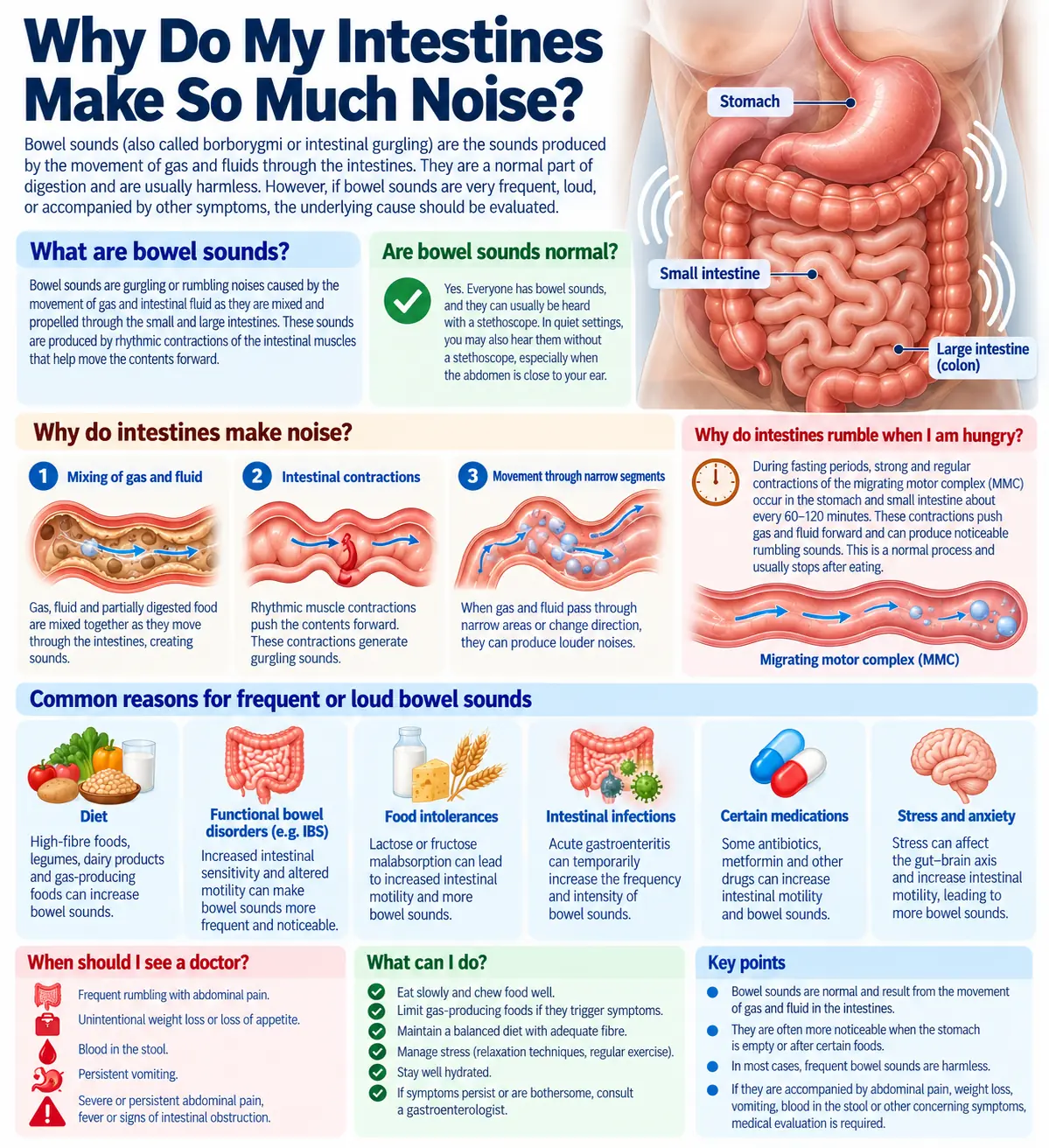
Do you often hear rumbling, gurgling or sloshing noises from your tummy? Do you notice them more when you are hungry, after meals or in quiet places?
Sounds from the bowel are usually just a result of the digestive system working normally. In some cases, however, they can be linked to bowel disease.
How are bowel sounds produced?
Bowel rumbling — medically called borborygmi — describes the sounds made as the stomach and intestines move.
The muscles along the digestive tract contract and relax in a regular rhythm. These movements are called peristalsis.
As fluids and gas inside the bowel shift during these movements, they make sounds that can be heard as rumbling or gurgling.
Important: A rumbling bowel does not always mean there is too much gas. The movement of normal amounts of gas and fluid can also make noise.
Why does the bowel rumble when you are hungry?
When you have not eaten, strong contractions occur in the stomach and small bowel at regular intervals.
This pattern of movement is called the migrating motor complex (MMC).
The MMC is a natural movement pattern that helps move stomach and small-bowel contents along between meals.
Because gas and fluid shift during these contractions, bowel sounds can be heard more clearly.
MMC cycles usually repeat roughly every 90–120 minutes, although this varies from person to person.
So a rumbling tummy when you are hungry is usually normal and is not a sign of disease on its own.
Why do bowel sounds increase after eating?
When you eat, the movements of the digestive system change.
The stomach and intestines become more active to digest the food and move it along.
During this time the movement of fluid and gas in the bowel can increase.
In some people in particular, rumbling becomes more noticeable after meals.
This does not always mean there is a food intolerance or bowel disease.
What causes constant bowel rumbling?
1. Irritable bowel syndrome (IBS)
In people with IBS, bowel movements and the way sensations from the bowel are perceived can change.
So some patients may notice normal bowel sounds more.
Rumbling may come with abdominal pain, bloating, diarrhoea or constipation.
But having a lot of bowel sounds alone does not make a diagnosis of IBS.
2. Lactose and other food intolerances
People with lactose intolerance can develop wind, bloating, abdominal pain and diarrhoea after milk and some dairy products.
In the same way, poor absorption of certain carbohydrates can increase the amount of gas and fluid in the bowel.
These changes can make bowel sounds easier to hear.
3. Bowel infections
In some bowel infections, bowel movements and fluid secretion can increase.
Rumbling may then come with diarrhoea, abdominal pain, nausea or fever.
Bowel infections should be considered especially when rumbling starts suddenly and comes with diarrhoea.
4. Coeliac disease and malabsorption
In coeliac disease, absorption of nutrients in the small bowel can be affected.
Some patients have wind, bloating, diarrhoea and more bowel sounds.
But bowel rumbling is not a symptom specific to coeliac disease.
5. Medicines
Some antibiotics, metformin and laxatives can change bowel movements or the water content of the stool.
As a result, bowel sounds may increase.
6. Stress and anxiety
There is constant communication between the bowel and the brain.
Stress and anxiety can affect bowel movements and the sensitivity of the digestive system in some people.
So rumbling may feel more noticeable at exciting or stressful times.
Are louder bowel sounds dangerous?
More bowel sounds on their own are usually not dangerous.
But bowel sounds should be judged together with the patient’s other symptoms.
For example, in some stages of bowel obstruction, high-pitched or frequent bowel sounds may be heard. In later stages the sounds may fade.
Even so, bowel obstruction can neither be diagnosed nor ruled out just by listening to the character of the bowel sounds.
Urgent assessment is needed especially when severe abdominal pain, marked swelling of the abdomen, vomiting and being unable to pass wind or stool occur together.
When should you see a doctor?
A gastroenterology assessment may be appropriate if bowel rumbling comes with:
- Long-lasting diarrhoea or constipation
- Recurrent abdominal pain
- Unintentional weight loss
- Blood in the stool
- Anaemia
- Bowel symptoms that wake you at night
- Marked loss of appetite
If there is severe abdominal pain, constant vomiting, marked swelling of the abdomen or inability to pass wind or stool, urgent medical assessment is needed.
What can help reduce bowel rumbling?
It is not necessary to get rid of bowel sounds completely, because they are part of the normal working of the digestive system.
But some measures may help people who find the rumbling bothersome.
Eating slowly, chewing food well and avoiding very large meals may help.
If fizzy drinks or certain foods make the symptoms worse, you can adjust how much of them you have according to your own tolerance.
If a condition such as lactose intolerance is found, the diet can be changed accordingly.
Unnecessary and overly strict diets should be avoided.
Frequently Asked Questions
Is constant bowel rumbling a sign of disease?
Usually not. Bowel sounds are made during normal digestive movements. But if other symptoms come with them, an assessment may be needed.
Why does my tummy make more noise when I am hungry?
When you are hungry, the natural contractions of the stomach and small bowel can move gas and fluid along more. So the sounds can be heard more clearly.
Can bowel rumbling be a sign of cancer?
Bowel rumbling on its own is not a symptom specific to bowel cancer. But if there is blood in the stool, unexplained weight loss, anaemia or a lasting change in bowel habit, investigation is needed.
Should I take medicine to reduce bowel sounds?
Taking medicine just to reduce bowel sounds is usually not necessary. Treatment should be planned according to the accompanying symptoms and any condition that is found.
Conclusion
Bowel rumbling mostly happens during the normal movements of the stomach and intestines.
Hunger, eating and the movement of gas and fluid in the bowel can make these sounds more noticeable.
Even so, IBS, food intolerances, bowel infections and some malabsorption problems can also come with rumbling.
Remember: hearing bowel sounds usually shows that the bowel is working. But if pain, diarrhoea, weight loss or other warning signs come with the sounds, the cause should be looked into.
This article is for general patient information. It does not replace an assessment by a doctor.
Sources
- Prof. Ali Tüzün İnce, MD